

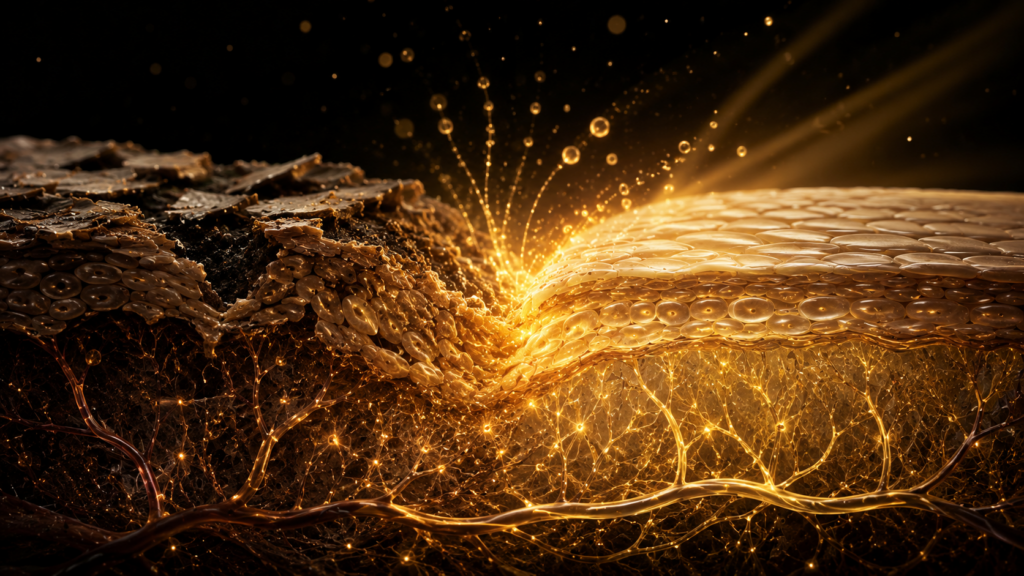
The skin is built to repair.
Every day, it responds to small injuries that may never become visible. Friction, dryness, ultraviolet exposure, shaving, pressure, environmental irritants, and ordinary movement all create minor forms of stress. Most of the time, the skin manages these disruptions quietly, restoring its barrier and maintaining the surface without drawing attention to the work taking place beneath it.
Larger injuries make the process easier to see. A cut closes. A scrape forms a protective crust. Redness gradually fades. New tissue replaces what was damaged. Even after the surface appears healed, deeper repair may continue for weeks or months.
Skin healing is not one single event. It is a coordinated sequence involving immune cells, blood vessels, nerves, structural proteins, barrier lipids, and multiple types of skin cells. Each stage depends on the one before it, and the quality of recovery can be influenced by age, health, circulation, hormones, nutrition, stress, sleep, medication, and the severity of the original damage.
Understanding how skin repairs itself helps explain why healing takes time, why inflammation is sometimes necessary, and why trying to accelerate recovery too aggressively can interfere with the process.
Repair Begins the Moment Damage Occurs
When the skin is injured, the body responds immediately.
Blood vessels constrict to reduce bleeding. Platelets gather at the damaged area and help form a clot. This temporary structure seals the opening and creates a foundation for the next phase of repair.
At the same time, damaged cells release chemical signals that alert the immune system. Nearby blood vessels begin to change, allowing immune cells and fluid to move into the tissue.
This is why a fresh injury may become red, warm, swollen, or tender. These changes can be uncomfortable, but they are part of the body’s early effort to protect the area.
The skin is not only closing a wound. It is evaluating what has happened, clearing damaged material, reducing the risk of infection, and preparing the tissue for rebuilding.
The Four General Stages of Skin Healing
Skin repair is often described in four overlapping stages:
- Hemostasis, when bleeding is controlled
- Inflammation, when the area is protected and cleared
- Proliferation, when new tissue and blood vessels are formed
- Remodeling, when the repaired tissue strengthens and reorganizes
These stages do not operate like separate rooms with doors that open and close. They overlap, and the timing can vary depending on the type and depth of the injury.
A small surface scrape may move through the process quickly. A deeper wound, surgical incision, burn, pressure injury, or chronic ulcer may require far more time and support.
The body follows the same broad repair pattern, but the demands placed on the tissue can be very different.
Inflammation Is Part of Healing
Inflammation is often treated as something that should always be reduced as quickly as possible. In wound healing, however, inflammation plays an essential role.
Immune cells arrive at the damaged area to remove bacteria, broken tissue, and cellular debris. They also release signals that help coordinate the arrival of other cells needed for repair.
Without an appropriate inflammatory response, the body would struggle to clean the wound and begin rebuilding.
The challenge is not inflammation itself. The challenge arises when inflammation becomes excessive, prolonged, or unable to resolve.
Too little inflammation may leave the area vulnerable to infection or incomplete repair. Too much may damage surrounding tissue, delay healing, and increase the likelihood of scarring or chronic irritation.
Healthy healing requires both activation and resolution. The body must respond strongly enough to protect the area, then gradually shift toward rebuilding.
New Tissue Begins to Form
Once the area has been stabilized and cleared, the skin begins constructing new tissue.
Keratinocytes, the primary cells of the epidermis, move across the wound to help restore the outer surface. Fibroblasts enter the area and begin producing collagen and other components of the extracellular matrix, the structural framework that supports the tissue.
New blood vessels also form to deliver oxygen and nutrients to the healing area.
During this phase, the wound may appear pink or red because blood flow remains increased and the new tissue is still developing. The surface may look delicate, shiny, or uneven.
This new tissue is functional, but it is not yet as strong or organized as the skin that was there before.
Healing is still underway even after the wound appears closed.
The Barrier Must Be Rebuilt
Closing the surface is only one part of recovery. The skin must also restore its barrier.
The barrier depends on organized skin cells, lipids, proteins, natural moisturizing factors, and a stable surface environment. After injury or irritation, these components may need to be replaced or reorganized.
Until the barrier is restored, the area may lose water more easily and remain vulnerable to irritants, friction, microorganisms, and environmental exposure.
This is why newly healed skin may feel tight, dry, sensitive, or itchy. Products that feel comfortable on surrounding skin may sting when applied to the recovering area.
The surface may look healed before it has regained its full ability to protect itself.
Remodeling Can Continue for Months
The final stage of healing is remodeling.
During this phase, collagen fibers are reorganized, unnecessary blood vessels are reduced, and the repaired tissue gradually becomes stronger.
Early collagen is often laid down quickly and without perfect organization. Over time, the body replaces and rearranges it to improve the structure of the area.
This process can continue for months and sometimes longer.
A scar may initially appear raised, firm, red, or dark. As remodeling continues, it may flatten, soften, and fade. However, repaired skin usually does not return completely to its original structure.
Scar tissue is typically less flexible than uninjured skin and may not contain the same arrangement of hair follicles, glands, nerves, and collagen.
Healing restores integrity, but it does not always recreate the original tissue exactly.
Why Some Injuries Leave Scars
A scar forms when an injury extends deeply enough to damage the dermis, the supportive layer beneath the epidermis.
Very shallow injuries may heal without noticeable scarring because the deeper structural framework remains intact. Deeper wounds require the body to fill the damaged area with new collagen.
The appearance of a scar depends on several factors, including:
- The depth, size, and location of the injury
- The amount of tension placed on the wound
- Infection or prolonged inflammation
- Genetics and skin tone
- Age and hormonal environment
- Repeated picking, scratching, or reopening
- Sun exposure during healing
- The way collagen is produced and remodeled
Some scars remain flat. Others become depressed, widened, raised, or thickened.
Hypertrophic scars stay within the boundaries of the original injury but become raised. Keloid scars extend beyond the original wound and result from excessive collagen production in susceptible individuals.
Scarring is not simply a cosmetic issue. Some scars can itch, hurt, restrict movement, or remain sensitive long after the injury has closed.
Post-Inflammatory Changes Are Part of Recovery
Not every lingering mark is a permanent scar.
After inflammation or injury, the skin may develop changes in color that remain after the original problem has resolved.
Post-inflammatory hyperpigmentation occurs when the skin produces excess pigment in response to inflammation. It may appear brown, gray, or darker than the surrounding skin and is especially common in deeper skin tones.
Post-inflammatory redness can occur when small blood vessels remain more visible after the skin has healed.
These changes may gradually fade, but the process can take weeks or months. Sun exposure may make pigmentation darker or more persistent.
Trying to remove the mark too aggressively can create new irritation and restart the inflammatory cycle. The skin may need protection and patience more than another round of intense treatment.
Why Healing Sometimes Slows
Skin repair requires energy, oxygen, nutrients, circulation, immune coordination, and healthy cellular activity. When one or more of these resources is limited, healing may slow.
Factors that can interfere with recovery include:
- Poor circulation
- Diabetes or unstable blood sugar
- Smoking or nicotine exposure
- Infection
- Inadequate nutrition
- Certain medications
- Immune system disorders
- Repeated pressure or friction
- Chronic inflammation
- Advanced age
- Dehydration
- Severe stress or sleep disruption
A wound may also struggle to heal if the original cause remains present. Continued pressure, moisture, scratching, irritation, or repeated exposure to an allergen can prevent the tissue from progressing normally through repair.
Slow healing is not always a failure of effort. It may be a sign that the tissue does not have the conditions or resources it needs.
Aging Changes the Repair Process
The skin’s ability to repair changes over time.
As people age, cellular turnover may slow. Collagen production decreases, the skin becomes thinner, circulation may become less efficient, and the immune response may change.
Oil production and hydration may also decline, making the barrier more vulnerable to dryness and disruption.
These changes do not mean older skin cannot heal. They mean healing may take longer and require greater protection.
Hormonal changes, particularly around menopause, can also affect collagen, elasticity, hydration, and wound recovery. Reduced estrogen can contribute to thinner, drier skin that is more easily injured.
This makes prevention increasingly important. Reducing friction, maintaining hydration, protecting the skin from sun exposure, and addressing wounds early can help limit unnecessary damage.
Sleep and Stress Influence Repair
Skin healing does not occur independently of the nervous system.
Sleep supports immune regulation, hormone balance, tissue repair, and metabolic recovery. When sleep is repeatedly disrupted, the body may have fewer resources available for repair.
Stress can also influence inflammation, blood flow, immune activity, and behavior. During stressful periods, people may scratch, pick, touch, or over-treat the skin more often. They may also sleep less, eat differently, or neglect wound care.
Stress does not automatically prevent healing, but chronic strain can create a less favorable recovery environment.
The skin may still repair, but it may do so more slowly or with greater inflammation.
Nutrition Supports the Work of Repair
Healing tissue requires building materials.
Protein provides amino acids used to produce collagen and other structural proteins. Vitamin C supports collagen formation. Zinc contributes to immune function and cellular repair. Iron helps support oxygen delivery, while adequate calories provide the energy needed for rebuilding.
A balanced diet usually provides these nutrients, but people with restricted intake, malabsorption, chronic illness, or significant wounds may have greater needs.
More supplementation is not always better. Excessive doses of certain nutrients can cause harm or interfere with medications.
Persistent or slow-healing wounds should be evaluated medically rather than managed through supplements alone.
Nutrition supports repair, but it cannot correct infection, poor circulation, uncontrolled blood sugar, or ongoing tissue damage by itself.
Moisture Can Help, but Too Much Can Harm
The idea that wounds should always be left open to dry is outdated for many types of injuries.
A properly moist environment can support cell movement, reduce cracking, and help the surface close more efficiently. This is one reason appropriate dressings are often used to protect wounds while maintaining moisture.
However, moisture must be controlled.
Too little can lead to dryness, crusting, and cracking. Too much can soften and damage the surrounding skin, a process known as maceration.
The right balance depends on the type of wound, the amount of drainage, the location, and the condition of the surrounding tissue.
A minor scrape may need simple cleansing and protection. A surgical wound, burn, ulcer, or infected area may require professional care and a more specific dressing plan.
Why Picking Interrupts Healing
A scab, flake, or peeling area can be difficult to leave alone.
However, picking repeatedly removes tissue that the body has already begun to repair. It can reopen the wound, increase bleeding, introduce bacteria, and restart inflammation.
This can lengthen healing time and increase the risk of pigmentation and scarring.
The same applies to acne lesions, irritated patches, and healing procedures. Pressing, squeezing, scratching, or peeling may provide temporary relief or the feeling of making progress, but it often creates additional injury.
The body cannot complete remodeling if the area is repeatedly returned to the beginning of the process.
Over-Treating Can Delay Recovery
When the skin looks rough, flaky, discolored, or uneven during healing, it can be tempting to accelerate the process with exfoliants, scrubs, acids, retinoids, or frequent procedures.
These treatments may have value once the skin is stable, but introducing them too early can damage new tissue and prolong inflammation.
Recovering skin often has a lower tolerance for active ingredients. Burning, stinging, or redness may indicate that the barrier is not ready.
The surface may need gentle cleansing, moisture, protection, and time rather than stronger correction.
Healing is not always improved by adding more activity. Sometimes the most effective intervention is reducing unnecessary interference.
Sun Exposure Can Change the Outcome
Newly healed and inflamed skin is especially vulnerable to ultraviolet exposure.
Sunlight can darken post-inflammatory pigmentation, prolong redness, and increase cellular stress. Repeated exposure may also make scars more noticeable.
Appropriate sun protection can help reduce these changes while the tissue matures.
This may include clothing, shade, hats, and sunscreen that the healing skin can tolerate. Sunscreen should not be applied directly to an open wound unless recommended by a healthcare professional, but it can become important once the surface has closed.
Protection is not only about preventing future damage. It helps preserve the progress the skin has already made.
Everyday Renewal Is Different From Wound Healing
The skin is always renewing itself, even when no injury is present.
New cells form in the deeper layers of the epidermis and gradually move toward the surface. As they mature, they become part of the protective outer barrier and are eventually shed.
This continuous turnover helps maintain the skin, but it is not the same as repairing a wound.
Wound healing requires emergency communication, immune activation, new blood vessels, collagen production, and the reconstruction of damaged tissue.
The language of cellular renewal is sometimes used in skincare marketing to imply that products can force the skin to completely regenerate. In reality, skin turnover is carefully regulated, and faster is not always healthier.
Excessive stimulation can create irritation without improving the quality of renewal.
Supporting the Skin’s Natural Repair Process
The best approach depends on the type and severity of the injury, but several general principles support recovery.
Keep the Area Appropriately Clean
Minor wounds can often be gently cleaned with water and mild soap. Harsh antiseptics may damage healthy tissue when used repeatedly, unless specifically recommended.
Protect the Wound
A suitable dressing can reduce contamination, friction, and repeated reopening. Dressings should be changed as directed and whenever they become dirty or overly saturated.
Support the Surrounding Barrier
The skin around an injury can become dry, irritated, or damaged by adhesive, moisture, or drainage. Protecting that surrounding tissue is part of wound care.
Avoid Unnecessary Irritation
Do not apply exfoliants, fragrance, essential oils, strong actives, or unapproved home remedies to open or newly healed skin.
Reduce Pressure and Friction
Repeated stress on the area can delay closure and damage new tissue. This is especially important for wounds on the feet, joints, or areas under tight clothing.
Allow Time for Remodeling
A wound may look closed before the tissue has regained strength. Returning too quickly to intense activity or aggressive treatment can cause reopening or irritation.
When a Wound Needs Medical Attention
Not every skin injury should be managed at home.
Medical evaluation is important for wounds that are deep, widely separated, heavily contaminated, caused by an animal or human bite, or involve possible damage to nerves, tendons, or joints.
Care should also be sought when a wound:
- Will not stop bleeding
- Becomes increasingly painful
- Develops spreading redness, warmth, or swelling
- Produces pus, odor, or unusual drainage
- Is accompanied by fever or chills
- Appears black, gray, or unusually pale
- Does not show signs of healing
- Reopens repeatedly
- Occurs in a person with diabetes, poor circulation, or significant immune suppression
Burns, pressure injuries, surgical wounds, and chronic ulcers often require specialized evaluation.
A wound that is not healing is not simply taking its time. It may be signaling infection, impaired circulation, repeated pressure, or another medical concern.
Recovery Is Not the Same as Returning to Before
Healing is often imagined as a return to the exact state that existed before the injury.
Sometimes the skin comes very close. A minor surface disruption may disappear without a trace.
Other injuries leave evidence. A scar, pigment change, altered sensation, or area of increased sensitivity may remain.
This does not mean the healing process failed. The body’s first priority is restoring protection and integrity, not producing a perfect visual result.
Repair is a form of adaptation.
The skin closes what has opened, replaces what has been lost, and reorganizes what remains. It works with the resources available and the conditions surrounding the injury.
Sometimes the result is nearly invisible. Sometimes it becomes part of the body’s permanent history.
The Intelligence of Repair
The skin does not heal through one dramatic act.
It heals through thousands of coordinated decisions.
When to clot.
When to inflame.
When to clear damaged tissue.
When to build new blood vessels.
When to produce collagen.
When to close the surface.
When to reduce the response and begin remodeling.
Each stage depends on timing. Protection must come before rebuilding. Inflammation must eventually give way to resolution. New tissue must be allowed to strengthen.
The process cannot always be rushed, and it cannot always be made invisible.
What the skin needs most during recovery is not constant correction. It needs protection, adequate resources, reduced disruption, and enough time to complete the work.
Healing is not passive.
It is one of the skin’s most complex forms of communication, coordination, and resilience.





