

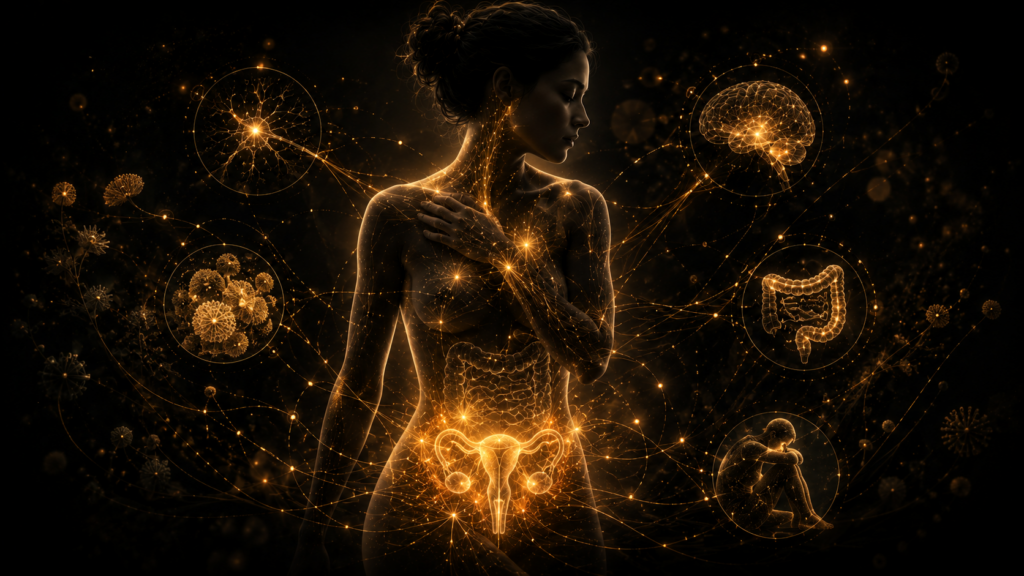
Endometriosis is often introduced as a condition that causes painful periods.
That description is not incorrect, but it is deeply incomplete.
For many people, endometriosis affects far more than menstruation. Pain may occur throughout the month rather than only during a period. Symptoms may involve the digestive system, bladder, lower back, hips, pelvic floor, energy levels, sleep, sexual health, fertility, and emotional well-being. Some people experience disabling symptoms despite having relatively limited visible disease, while others have extensive endometriosis with little or no pain.
This complexity is one reason the condition can be difficult to recognize and diagnose.
Endometriosis is a chronic disease in which tissue similar to the lining of the uterus is found outside the uterus. These areas of abnormal tissue, often called lesions or implants, may contribute to inflammation, scarring, adhesions, cysts, and changes in the way nearby nerves and organs function.
The condition most commonly affects structures within the pelvis, but its impact does not necessarily remain confined there. Endometriosis can influence the body through inflammatory signaling, persistent pain pathways, hormonal responsiveness, muscular guarding, sleep disruption, fatigue, and the cumulative burden of living with symptoms that are frequently minimized or misunderstood.
Understanding endometriosis therefore requires more than locating lesions. It requires looking at the whole system in which pain, inflammation, movement, digestion, reproduction, and nervous-system activity are interacting.
What Endometriosis Is
The inner lining of the uterus is called the endometrium. During the menstrual cycle, this lining thickens in preparation for a possible pregnancy and sheds during menstruation when pregnancy does not occur.
Endometriosis involves tissue that resembles the endometrium but develops outside the uterus. It is not simply menstrual tissue that has moved to the wrong location, and researchers are still investigating how the disease begins and why it develops in some people but not others.
Endometriosis may be found on or near the:
- Ovaries
- Fallopian tubes
- Outer surface of the uterus
- Pelvic lining
- Tissue behind the uterus
- Bladder
- Bowel
- Ligaments supporting the uterus
- Space between the vagina and rectum
Less commonly, endometriosis may occur outside the pelvis, including on the diaphragm or within the chest.
These lesions can respond to hormonal signals, produce inflammatory substances, interact with nerves, and contribute to the formation of scar tissue. Ovarian endometriosis may form cysts called endometriomas, while deeper disease may grow into or around surrounding structures.
The presence of lesions is only one part of the condition. The body’s response to them also matters.
Endometriosis Is Not Simply a Menstrual Problem
Menstrual pain is one of the most familiar symptoms of endometriosis, but the disease is not limited to the days of active bleeding.
Pain may begin before menstruation and continue afterward. Some people develop ongoing pelvic pain that no longer follows a predictable cycle. Others experience symptoms during ovulation, bowel movements, urination, exercise, prolonged sitting, or sexual activity.
Endometriosis may also contribute to:
- Heavy or prolonged menstrual bleeding
- Pain during or after sexual intercourse
- Lower-back, hip, abdominal, or leg pain
- Painful bowel movements
- Constipation, diarrhea, bloating, or nausea
- Painful urination or bladder urgency
- Fatigue
- Difficulty becoming pregnant
- Sleep disruption
- Pelvic-floor dysfunction
- Anxiety, depression, or emotional exhaustion related to chronic symptoms
Not every person experiences all of these symptoms, and having one or more does not automatically mean endometriosis is present. Many other conditions can produce similar patterns.
However, symptoms that repeatedly interfere with school, work, sleep, relationships, movement, sexual activity, or ordinary daily life deserve evaluation. Severe pain should not be dismissed simply because it occurs around menstruation.
Pain Severity Does Not Always Match Disease Extent
One of the most confusing aspects of endometriosis is that the amount of visible disease does not always predict the intensity of pain.
A person with a small number of lesions may experience debilitating symptoms. Another person may have extensive disease discovered during surgery despite reporting little discomfort.
This does not mean the pain is exaggerated or psychological. Pain is influenced by more than the size or number of lesions.
The location of the disease may matter. A small lesion near a highly sensitive nerve or structure may create more pain than a larger lesion in another area. Inflammation, scar tissue, organ restriction, pelvic-floor tension, and the sensitivity of the nervous system may also influence how the body experiences the condition.
Pain is not a simple measurement of tissue damage. It is a protective signal created by the nervous system after interpreting information from the body.
In chronic conditions, that system can become increasingly responsive over time.
Inflammation Extends the Conversation Beyond the Lesions
Endometriosis is associated with ongoing inflammatory activity. Lesions and surrounding tissues may release signaling molecules that attract immune cells and influence blood vessels, nerves, and nearby organs.
This inflammatory environment may contribute to swelling, tenderness, pain, scar formation, and changes in tissue function.
Inflammation can be protective in the short term. It helps the body respond to injury and potential threats. When inflammatory signaling becomes persistent, however, it may begin to alter the surrounding environment rather than simply resolve a temporary problem.
The pelvis contains many structures within a relatively small space. The uterus, ovaries, bladder, bowel, muscles, ligaments, blood vessels, and nerves are closely positioned and share overlapping communication pathways.
Inflammation involving one structure may therefore influence how neighboring tissues behave. The result can be pain that is difficult to locate precisely or symptoms that appear to involve several systems at once.
This does not mean endometriosis causes every symptom occurring elsewhere in the body. It means local disease can create effects that extend beyond the visible boundary of an individual lesion.
When the Nervous System Becomes More Protective
Pain begins as protection. It alerts the body to injury, irritation, pressure, or possible danger.
When pain continues for a long time, the nervous system may become more sensitive to incoming signals. This process is sometimes called sensitization.
Sensitized nerves may respond more strongly to stimulation that would normally produce less discomfort. Pain may spread beyond the original area, last longer after a trigger has passed, or occur in response to ordinary activities such as sitting, movement, bowel function, or touch.
The spinal cord and brain may also become more efficient at producing the pain response. This does not mean the pain is imagined. It means the system responsible for detecting danger has learned to remain on high alert.
Inflammation, repeated painful cycles, surgical procedures, muscle tension, poor sleep, stress, and fear of triggering pain may all reinforce this protective state.
This helps explain why removing or suppressing endometriosis lesions may not always eliminate every symptom immediately. The original source of irritation may improve while muscles, nerves, and pain-processing pathways still require time and targeted support.
Treating chronic pain may therefore involve more than treating lesions alone.
The Pelvic Floor May Become Part of the Pattern
The pelvic floor is a group of muscles and connective tissues that supports the pelvic organs and contributes to bladder, bowel, sexual, and core function.
When pelvic pain occurs repeatedly, these muscles may tighten in an attempt to protect the area. This guarding response can be useful during an acute injury, but persistent tension may eventually contribute to additional symptoms.
An overactive or poorly coordinated pelvic floor may cause or worsen:
- Pain during penetration or sexual activity
- Difficulty emptying the bladder or bowel
- Urinary urgency or frequency
- Constipation
- Tailbone, hip, or lower-back pain
- Pressure or heaviness
- Pain with sitting
- Pain after exercise
Pelvic-floor tension may remain even on days when endometriosis-related inflammation is less active. Over time, the muscles themselves can become another source of pain.
This is why pelvic-floor physical therapy may be included in a broader treatment plan. The goal is not simply to strengthen the pelvic floor. Some people need help relaxing, lengthening, coordinating, and retraining muscles that have been bracing for years.
Digestive Symptoms Are Common but Complicated
Many people with endometriosis report bloating, nausea, constipation, diarrhea, painful bowel movements, or abdominal discomfort.
In some cases, lesions directly involve or grow near the bowel. Scar tissue and adhesions may restrict movement between organs. Inflammation and pelvic-floor dysfunction can also affect bowel comfort and coordination.
However, digestive symptoms do not always mean endometriosis is physically growing into the bowel. Conditions such as irritable bowel syndrome, inflammatory bowel disease, food intolerance, pelvic-floor dysfunction, and other gastrointestinal disorders can produce overlapping symptoms.
A person may also have more than one condition at the same time.
This overlap can make diagnosis difficult. Digestive complaints may be treated as entirely gastrointestinal, while cyclical pain or other reproductive symptoms are overlooked. Conversely, every digestive symptom should not automatically be attributed to endometriosis once the condition is suspected or diagnosed.
Patterns can provide useful information. Symptoms that worsen around menstruation, occur with pelvic pain, or involve painful bowel movements may be especially important to discuss with a clinician.
The goal is not to force every symptom under one diagnosis. It is to understand how several systems may be contributing to the complete experience.
Bladder Symptoms May Also Be Overlooked
Endometriosis involving or near the bladder may contribute to pelvic pressure, painful urination, urinary urgency, or discomfort when the bladder is full.
Even without direct bladder involvement, pelvic-floor tension and nervous-system sensitization may affect urinary symptoms. The bladder and reproductive organs share nearby nerves and muscular structures, allowing discomfort in one area to influence another.
Some people are repeatedly treated for urinary tract infections despite negative testing because pain, urgency, or burning resembles an infection. Others may actually experience recurrent infections in addition to endometriosis.
Symptoms such as blood in the urine, fever, severe flank pain, or signs of infection require appropriate medical evaluation. Endometriosis should not be assumed to be the cause of every urinary problem.
Still, urinary symptoms that follow a cyclical pattern or repeatedly occur alongside pelvic pain may deserve a broader gynecological assessment.
Fatigue Is More Than Feeling Tired
Fatigue is a common but often underestimated part of living with endometriosis.
Pain itself requires energy. The nervous system remains alert, muscles stay tense, and sleep may be interrupted. Heavy bleeding can contribute to iron deficiency or anemia. Inflammatory signaling may also influence energy, concentration, and the sense of physical exhaustion.
Medical appointments, repeated testing, treatment side effects, uncertainty, and the effort required to continue daily responsibilities while in pain add another layer of strain.
This type of fatigue may not resolve with one good night of sleep. It can feel like the body is operating with a reduced reserve.
Fatigue should still be evaluated rather than automatically attributed to endometriosis. Thyroid disorders, anemia, nutrient deficiencies, sleep disorders, medication effects, depression, infection, and many other conditions can produce similar symptoms.
Endometriosis may be one contributor within a larger picture.
Endometriosis and Fertility
Endometriosis is associated with difficulty becoming pregnant, but the relationship is not absolute.
Many people with endometriosis conceive without assistance. Others experience infertility even when disease appears limited. The condition may affect fertility through inflammation, ovarian cysts, scar tissue, changes in pelvic anatomy, altered egg release, or interference with the movement of the egg and sperm.
Age, ovarian reserve, sperm health, ovulation, uterine factors, fallopian-tube function, and other health conditions also influence fertility.
A diagnosis of endometriosis does not guarantee infertility, just as difficulty conceiving does not automatically mean endometriosis is present.
Treatment decisions may differ depending on whether the primary goal is pain control, pregnancy, preservation of fertility, or some combination of these. Hormonal medications that suppress ovulation may help manage symptoms but prevent pregnancy while they are being used.
Surgery may improve fertility in some situations but can also affect ovarian tissue, especially when endometriomas are removed. These decisions are highly individual and should be made with clinicians who understand both endometriosis and reproductive goals.
The body’s reproductive capacity cannot be reduced to one lesion, one hormone level, or one diagnosis.
Why Diagnosis Can Take So Long
Endometriosis is frequently diagnosed only after years of symptoms.
Several factors contribute to this delay. Menstrual pain is often normalized within families, schools, workplaces, and healthcare settings. People may be told that severe cramping is simply part of being female or that they need to become more tolerant of discomfort.
Symptoms may also resemble other conditions, including irritable bowel syndrome, bladder disorders, pelvic-floor dysfunction, ovarian cysts, musculoskeletal pain, and other gynecological conditions.
Routine examinations and imaging may not always reveal superficial or small areas of disease. A normal ultrasound does not necessarily rule out endometriosis, although imaging can identify some ovarian cysts and forms of deeper disease.
Historically, laparoscopy was often described as the only way to confirm endometriosis. Current clinical approaches increasingly recognize that treatment and evaluation can begin when symptoms and medical history strongly suggest the condition, without requiring every person to undergo immediate surgery. Surgery remains important in some cases, but it is not the only doorway through which symptoms can be taken seriously.
There is currently no single blood, urine, or home test that can definitively diagnose endometriosis.
Diagnosis is therefore often built from several pieces: symptom history, menstrual patterns, physical examination, imaging, response to treatment, and, when appropriate, surgical findings.
The Importance of Symptom Patterns
Because endometriosis can produce varied symptoms, tracking patterns may help make the overall picture clearer.
Useful information may include:
- When pain begins and how long it lasts
- Whether symptoms change across the menstrual cycle
- The location and quality of pain
- Pain during bowel movements, urination, exercise, or sex
- Bleeding patterns
- Digestive or bladder symptoms
- Fatigue and sleep disruption
- Medications or treatments tried
- Activities missed because of symptoms
- Family history of endometriosis or severe menstrual pain
A symptom diary does not diagnose the condition, but it can show frequency, severity, and relationships that may be difficult to remember during a short appointment.
The effect on daily life also matters. Pain that repeatedly causes missed work, school absences, vomiting, fainting, inability to stand, or dependence on high doses of pain medication should not be treated as an ordinary inconvenience.
Treatment Is Not One-Size-Fits-All
There is currently no single treatment that works for every person with endometriosis.
Treatment may involve pain-relieving medications, hormonal therapy, surgery, pelvic-floor rehabilitation, fertility care, psychological support, or combinations of these approaches.
The right plan depends on symptoms, age, medical history, disease location, treatment response, fertility goals, personal preferences, and access to specialized care.
Hormonal treatments may reduce ovulation, menstruation, or the hormonal stimulation of lesions. These may include certain birth-control formulations, progestin-based therapies, and other medications that alter reproductive hormone signaling.
Hormonal treatment can improve symptoms for many people, but it does not work equally well for everyone. Side effects, medical contraindications, fertility plans, and individual response all matter.
Surgery may be considered when symptoms remain severe, imaging suggests significant disease, organs are affected, fertility is a concern, or diagnosis remains uncertain. Surgical quality and experience can strongly influence outcomes because endometriosis can appear in different forms and locations.
Even after treatment, symptoms may recur or persist. Endometriosis is a chronic condition, and successful care may focus on long-term management rather than a one-time cure.
A Hysterectomy Is Not Automatically a Cure
A hysterectomy removes the uterus. Endometriosis, by definition, develops outside the uterus.
For some people, removing the uterus may help symptoms related to heavy bleeding, adenomyosis, or uterine pain. However, hysterectomy does not automatically remove endometriosis lesions elsewhere in the body.
The ovaries may be removed during some procedures, which reduces estrogen production, but this creates surgical menopause and carries significant health considerations. Endometriosis symptoms may still persist in some cases, particularly if lesions remain.
Decisions about hysterectomy or ovary removal should therefore be based on the complete clinical picture rather than presented as a simple cure.
The uterus may be part of the pain experience, but it is not always the entire disease.
Whole-Body Support Does Not Mean Blaming the Patient
Because endometriosis involves inflammation, pain, digestion, sleep, and stress, people are often advised to change their diet, exercise routine, weight, supplements, or mindset.
Some supportive practices may improve quality of life or help manage individual symptoms. Gentle movement may reduce stiffness. Adequate nutrition may help address deficiencies. Sleep support, heat, pacing, stress-management tools, and pelvic-floor therapy may all have value.
However, these approaches do not mean the disease was caused by poor choices, insufficient positivity, or a lack of discipline.
There is no single endometriosis diet, and no food plan has been proven to eliminate the condition. Restrictive eating can create nutritional deficiencies, anxiety, and an unhealthy relationship with food, particularly when people are desperate for relief.
Lifestyle support should expand a person’s resources rather than make them responsible for curing a complex disease.
The burden of endometriosis belongs to the condition, not to the person living with it.
Chronic Pain Affects Emotional Health
Living with recurring or unpredictable pain can reshape daily life.
People may fear making plans because they do not know how they will feel. Sexual relationships may become complicated by pain or anxiety about pain. Work performance may be affected by fatigue, bleeding, medication side effects, or medical appointments.
Repeatedly being told that symptoms are normal or exaggerated can create self-doubt. Some people begin questioning their own perception of pain after years of dismissal.
Anxiety and depression may develop alongside chronic pain, infertility, financial strain, and reduced independence. These emotional effects do not make the physical disease less real.
Mental-health care can be an important part of treatment, not because endometriosis is psychological, but because living with chronic illness affects the entire person.
Support may help with grief, medical trauma, relationships, pain coping, identity changes, and the exhaustion of navigating a condition that others cannot always see.
Building a Multidisciplinary Care Plan
Because endometriosis can affect several systems, care may involve more than one type of clinician.
Depending on symptoms and goals, a care team may include:
- A gynecologist or endometriosis specialist
- A pelvic-floor physical therapist
- A pain-management clinician
- A gastroenterologist or urologist
- A fertility specialist
- A primary-care clinician
- A mental-health professional
- A dietitian when digestive symptoms or nutritional concerns are present
Not every person needs every specialist. The point is that no single discipline always captures the complete experience.
Coordinated care can help distinguish symptoms caused directly by lesions from those involving muscles, nerves, digestion, bladder function, or other overlapping conditions.
Whole-body treatment is not the same as treating every symptom as vague or unexplained. It means identifying each contributor as precisely as possible.
When to Seek Medical Evaluation
Menstrual discomfort is common, but pain that repeatedly disrupts life deserves attention.
Evaluation may be appropriate when periods cause severe pain, vomiting, fainting, missed work or school, or an inability to complete ordinary activities. Pain during sex, bowel movements, or urination should also be discussed, particularly when it follows a menstrual pattern.
Other reasons to seek care include:
- Chronic or worsening pelvic pain
- Very heavy bleeding
- Difficulty becoming pregnant
- Recurring abdominal or pelvic bloating with pain
- Blood in the urine or stool
- Unexplained weight loss
- Fever or sudden severe pain
- Symptoms that persist despite initial treatment
Sudden, intense pelvic pain may have causes other than endometriosis, including ovarian torsion, ectopic pregnancy, cyst rupture, infection, or appendicitis, and may require urgent evaluation.
A person does not need to prove that pain is unbearable before asking for help.
Beyond the Pelvis
Endometriosis begins with tissue located outside the uterus, but its impact may extend through many layers of the body.
Lesions can create local irritation and scar tissue. Inflammation can alter the environment around nearby organs. Muscles may tighten in response to pain. Nerves may become more sensitive. Sleep and energy may decline. Digestion, bladder function, sexuality, fertility, and emotional health may all become part of the experience.
This does not mean every symptom in a person with endometriosis is caused by the disease. It means the condition should not be reduced to a painful period or a few spots found during surgery.
The extent of suffering cannot always be measured by lesion size, disease stage, imaging, or the number of days a person bleeds.
Pain is real even when it is difficult to capture on a scan.
Fatigue is real even when laboratory results are normal.
The disruption to work, relationships, movement, and identity is real even when others cannot see it.
Endometriosis is a reproductive-health condition, but it is also an inflammatory, neurological, physical, and deeply human experience.
Seeing the whole body does not make the disease less specific.
It makes the care more complete.